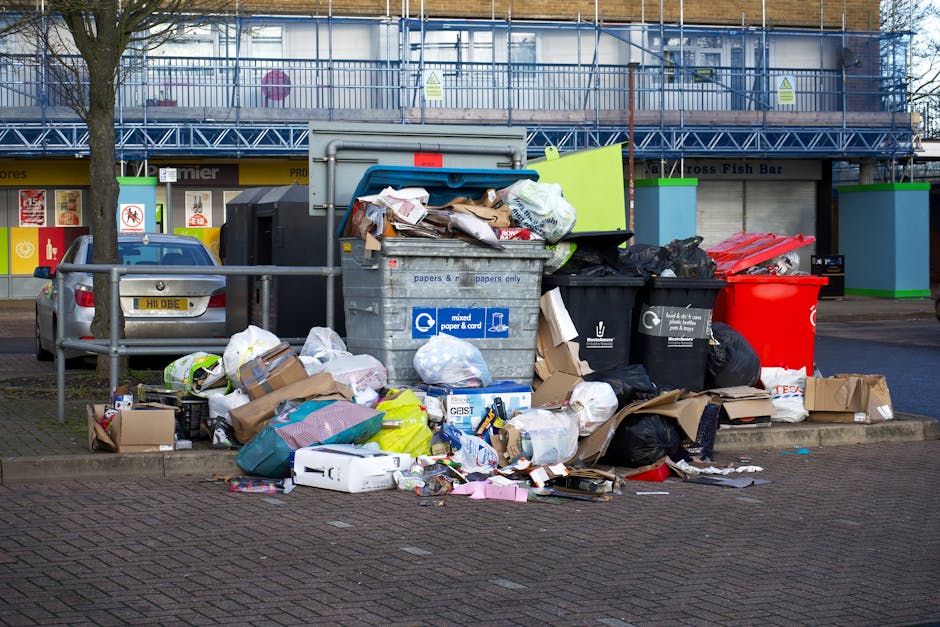
Same-day vs scheduled rubbish removal in Leytonstone: which option actually fits your day?
If you are weighing up same-day vs scheduled rubbish removal in Leytonstone, you are probably trying to solve a very ordinary but slightly stressful problem: the junk is there, the room feels cramped, and you need it gone without turning your week upside down. Maybe it is a flat clear-out before tenants move in, a builder's heap that appeared overnight, or a garage that has quietly become a storage cave. Either way, timing matters. A lot.
In Leytonstone, the best choice is not always the fastest one. Same-day collection can be a lifesaver when plans change suddenly, but scheduled rubbish removal often gives you better control, smoother access, and less disruption. This guide breaks down how both approaches work, when each makes sense, the practical trade-offs, and a few mistakes people make when they are trying to be clever and save an hour. Truth be told, the wrong timing can cost more than the rubbish itself.
Quick take: choose same-day removal when urgency, access, or safety is the priority; choose scheduled removal when you want better planning, easier preparation, and a calmer process.
Table of Contents
- Why the timing decision matters in Leytonstone
- How same-day and scheduled rubbish removal works
- Key benefits and practical advantages
- Who this is for and when it makes sense
- Step-by-step guidance
- Expert tips for better results
- Common mistakes to avoid
- Tools, resources and recommendations
- Law, compliance, standards and best practice
- Options, methods, and comparison table
- Case study or real-world example
- Practical checklist
- Conclusion
- Frequently asked questions
Why Same-day vs scheduled rubbish removal in Leytonstone Matters
Rubbish removal sounds simple until it collides with real life. A delivery window slips. A landlord calls. The builders finish earlier than expected and the pile at the front of the property is suddenly in the way. In a busy part of east London like Leytonstone, timing affects everything from parking to access, neighbours, lift use, and how long a clearance actually takes.
The decision between same-day and scheduled removal matters because it changes three things at once: speed, control, and cost. Same-day is built around urgency. Scheduled removal is built around preparation. Neither is better in every situation. The right answer depends on how quickly the waste needs to go, how much there is, and whether the property is easy to access.
There is also a stress factor. People often underestimate how much calmer a planned clearance feels. On the other hand, if you are staring at a room full of clutter the night before a handover, calm may not be what you need. You need action. Fast.
If your clearance is part of a bigger project, it can help to look at the broader service picture too. For example, furniture-heavy jobs often sit better alongside furniture disposal, while bigger property projects may be more naturally handled through house clearance or home clearance. That way the timing matches the job, not the other way around.
How Same-day vs scheduled rubbish removal in Leytonstone Works
At a practical level, both options follow the same basic pattern: you describe the waste, get an estimate, confirm access, and arrange collection. The difference is in the lead time and the amount of planning built into the visit.
Same-day rubbish removal
Same-day rubbish removal is exactly what it sounds like: collection arranged for the same day you make contact, subject to availability and the scale of the job. It is best suited to situations where delay would create an immediate problem. Think blocked hallways, a last-minute office move, post-builder debris, or unwanted items that are becoming a nuisance. In a lot of cases, the team needs a quick description, photos if possible, and clear access information so they can decide whether the job fits the time available.
The trade-off is that same-day collection is less forgiving. If the waste is scattered across several rooms, if parking is tight, or if the property needs careful sorting, the service may still happen quickly, but the scope has to be realistic. Nobody wants a rushed clearance that leaves half the mess behind. That would defeat the point, wouldn't it?
Scheduled rubbish removal
Scheduled removal is arranged for a future date and time, giving you space to prepare. That can mean sorting items into keep, donate, recycle, and remove piles; checking access; clearing stairways; and making sure heavy items are ready to move. It often suits larger clearances, office work, or jobs where several people need to agree on what goes.
A scheduled booking also makes sense when the waste is predictable. For example, after a renovation, you may already know the builders' waste will be ready next Friday, not today. In that case, a planned visit is usually the cleaner choice. If the job is commercial in nature, a scheduled slot may fit better with business waste removal or office clearance, where timing around staff, customers, or handover dates is especially important.
One useful thing to remember: scheduled does not mean slow in a bad way. It often means efficient. There is less guesswork, fewer surprises, and a better chance of handling the job neatly first time.
Key Benefits and Practical Advantages
Once you strip away the marketing noise, the benefits are pretty straightforward.
- Same-day removal gives you speed, flexibility, and rapid problem-solving.
- Scheduled removal gives you better preparation, easier coordination, and often less disruption.
- Both can reduce clutter quickly, which helps with safety, space, and peace of mind.
But the real value is in what happens around the collection itself. Same-day removal can stop a small issue from becoming a bigger one. For example, if waste is left outside in the rain, it gets heavier, uglier, and sometimes harder to move. If it is blocking access or attracting complaints, getting it removed today can save a lot of hassle.
Scheduled removal, meanwhile, gives you room to be selective. That matters more than people think. You can decide what stays, what goes, and what should be separated for recycling. If you are clearing out a garage, a loft, or a shed, that extra breathing space can improve the end result. You are less likely to chuck out something useful by accident. We have all done that kind of thing at least once, usually in a hurry.
There is also a budgeting angle. Same-day jobs can sometimes cost more simply because they require immediate routing and capacity. Scheduled jobs can be easier to quote accurately because the amount of waste and the access conditions are clearer. If you want to compare your options properly, it helps to review pricing and quotes before making a decision.
For people who care about disposal standards, planned collections can also make recycling easier because waste can be separated in advance. That ties in well with recycling and sustainability, especially when the clearance includes mixed materials, reusable furniture, or items that need to be sorted more carefully.
Who This Is For and When It Makes Sense
The short answer? Almost anyone dealing with waste, clutter, or bulky items in Leytonstone. The better question is: how urgent is it, and how much planning can you spare?
Same-day rubbish removal makes sense if you:
- need a property cleared before keys are handed over
- have post-renovation debris that is in the way
- are dealing with an unexpected move or deadline
- need to restore access to a hallway, driveway, or loading area
- want clutter gone before visitors, inspections, or photographs
Scheduled rubbish removal makes sense if you:
- have time to sort items properly
- are clearing a larger property or multiple rooms
- need to coordinate with tenants, staff, or tradespeople
- are removing bulky furniture, loft contents, or mixed household waste
- prefer a calmer, more predictable process
For example, a flat clearance in Leytonstone is often better scheduled if residents need time to separate personal items. By contrast, an emergency furniture removal after a sudden move-out may be better handled on the same day. If the job is tied to a bigger property clean-up, the more complete service pages such as flat clearance, loft clearance, or garage clearance can help you think about the right scope from the start.
Step-by-Step Guidance
If you want the process to go smoothly, the timing decision should be made in a sensible order. Here is the simplest way to approach it.
- Identify the urgency. Ask whether the waste is causing immediate disruption, safety issues, or a deadline problem. If yes, same-day may be justified.
- Estimate the volume. A few bulky items is very different from a full property load. The bigger the job, the more scheduled removal usually helps.
- Check access. Narrow stairs, parking restrictions, shared entrances, or lift limits can all affect timing.
- Sort what can be separated. If you have time, divide items into reusable, recyclable, and disposable piles.
- Ask for a realistic collection window. Same-day jobs need clarity. Scheduled jobs need a slot that gives you enough preparation time.
- Prepare the space. Move smaller items out of the way, clear a route, and make sure the team can reach the main load quickly.
- Confirm the service scope. Double-check what is being removed and whether anything needs special handling.
That last point matters more than people expect. A job can look simple until someone says, "Oh, that mattress is staying," or "Actually, the cabinet needs to go too." Little changes like that can affect both timing and price. Better to say it early. Saves everyone a headache.
Expert Tips for Better Results
Here are the habits that usually make the biggest difference, especially in a busy local setting.
- Use same-day removal for pain, not convenience. If the issue is simply that you would like the room clear sooner, a scheduled slot may be the smarter choice.
- Take photos before you book. A few clear pictures help describe the waste honestly and avoid surprises.
- Be exact about access. Parking on a busy street, top-floor flats, basement spaces, and tight stairwells all matter.
- Keep hazardous or specialist items separate. If something is broken, sharp, or unusual, mention it rather than slipping it into the general pile.
- Plan for weather. A damp pile in the morning can be awkward by afternoon, especially if cardboard, soft furnishings, or garden waste are involved.
A small but useful tip: if you are unsure whether the job is "same-day worthy," ask yourself this: would waiting until tomorrow create a real problem, or just a slight inconvenience? That question usually cuts through the noise.
And yes, schedules matter. But not every schedule has to be rigid. Sometimes the best decision is simply to choose the option that keeps the whole week from wobbling.
Common Mistakes to Avoid
People usually do not get rubbish removal wrong because they are careless. They get it wrong because they are rushing. That is a different thing.
- Booking same-day without checking access. If the team cannot park nearby or reach the waste efficiently, the speed advantage disappears.
- Underestimating how much rubbish there is. A "small clear-up" can turn into a full load quickly once you start moving things.
- Leaving sorting until collection day. That is fine for tiny jobs, but not ideal for larger clearances.
- Forgetting to mention bulky or awkward items. Wardrobes, broken beds, awkward office furniture, and garden debris all take different handling.
- Choosing the fastest option by default. Fast is not always best. Sometimes it is just fast.
Another common mistake is ignoring the rest of the property. If you are removing rubbish from a house and the loft, garage, or shed are also full, the job may be better handled as part of a wider clearance rather than treated as a one-off pile removal. Services like house clearance or furniture clearance can give you a cleaner overall result.
If you are handling commercial waste, do not treat it like a household bag-and-bin job. Office clearances and business waste need slightly more care, especially around documents, equipment, and anything that should be kept secure.
Tools, Resources and Recommendations
You do not need fancy kit to prepare for rubbish removal, but a few simple things help:
- strong bin bags or rubble sacks for loose waste
- tape and labels for separating keep/recycle/remove items
- gloves for sharp or dusty items
- a phone camera for quick photos and job notes
- clear access routes from the load area to the exit
It also helps to keep your decision-making options in one place. If you are comparing service types, the most useful starting points are often waste removal for general mixed loads and the more specific service pages when the contents are more defined. For example, garden waste is easier to judge through garden clearance, while a property clean-out may be better matched to home clearance or loft clearance.
One recommendation that sounds obvious but gets overlooked: write down what needs to go before you start moving it. By the time you have shifted half of it into the hallway, your memory is suddenly very creative. Funny how that works.
Law, Compliance, Standards and Best Practice
Rubbish removal is not only about convenience. In the UK, waste should be handled responsibly, and reputable operators are expected to dispose of it through appropriate channels. You do not need to become a compliance expert to book a clearance, but you should expect a few basic standards.
Best practice usually includes:
- clear identification of what will be removed
- careful handling of bulky, sharp, or awkward items
- proper sorting where recycling is possible
- professional conduct on site
- safe working practices for loading and lifting
If you are dealing with business premises, there is often a stronger need for traceability, tidy working, and minimal disruption. Commercial jobs benefit from careful planning and from being honest about what is being removed, especially where furniture, office equipment, or mixed materials are involved.
Safety matters too. A rushed same-day job should still be safe. Lifting should be controlled, access should be checked, and the working area should be assessed before anything heavy is moved. If you are comparing providers, it is sensible to look at health and safety policy information and insurance and safety details so you know the business takes the job seriously.
There are also standard consumer expectations around clear terms, pricing clarity, and reasonable communication. If the booking is urgent, ask how the service handles access problems, changes in load size, or delays. That kind of practical clarity helps more than lofty promises ever will.
Options, Methods, and Comparison Table
Here is a simple comparison that shows where each option tends to shine.
| Factor | Same-day rubbish removal | Scheduled rubbish removal |
|---|---|---|
| Speed | Very fast, usually arranged for the same day if capacity allows | Planned in advance, not immediate |
| Best for | Urgent, unexpected, or time-sensitive waste | Larger, planned, or coordinated clearances |
| Preparation time | Minimal | More time to sort, label, and clear access |
| Cost control | Can be less predictable if the scope changes | Often easier to quote accurately |
| Stress level | Lower stress when urgency is the main issue | Lower stress when planning and coordination matter |
| Ideal property type | Single rooms, emergency clear-outs, quick access jobs | Whole homes, offices, lofts, garages, and larger mixed loads |
A useful way to think about it is this: same-day removal solves the problem of now, while scheduled removal solves the problem of organisation. Most households and businesses need a bit of both at different times.
Case Study or Real-World Example
Imagine a Leytonstone flat where a tenant has just moved out, leaving behind a sofa, a broken chair, a pile of cardboard, and a few bags of mixed junk. The letting agent wants the property ready for viewings within 24 hours. In that situation, same-day rubbish removal makes sense because delay would affect the next step.
Now picture a loft clearance in the same area. There are old boxes, seasonal decorations, outdated electronics, and a heavy armchair that no one can quite remember how it got up there. There is no emergency, but there is time next Tuesday to sort it properly. Scheduled removal is usually the better fit there. You can decide what stays, what gets recycled, and what needs careful handling. Less scramble, fewer mistakes.
The difference in outcome is subtle but real. The same-day job restores order quickly. The scheduled job improves order more thoughtfully. One gets the fire under control. The other cleans the kitchen properly after the smoke has cleared. Slightly dramatic maybe, but you get the idea.
Practical Checklist
Use this before you book.
- Have I checked how urgent the clearance really is?
- Do I know roughly how much waste needs removing?
- Have I noted any bulky, heavy, or awkward items?
- Is access clear for collection?
- Will parking or loading be straightforward?
- Have I separated anything I want to keep?
- Do I need recycling, reuse, or disposal to be handled carefully?
- Would a scheduled slot save me stress and prevent mistakes?
- Do I need the job done today because of a deadline or safety issue?
- Have I reviewed the service type that best matches the load?
If you can answer those honestly, the choice usually becomes much clearer. And if not, that is fine too. Not every clearance starts with a neat plan. Some just start with a pile and a sigh.
Conclusion
Choosing between same-day and scheduled rubbish removal in Leytonstone comes down to the shape of the problem in front of you. If the waste is urgent, awkward, or blocking your plans, same-day collection can be the right call. If the job is bigger, more coordinated, or worth doing carefully, a scheduled visit usually gives you better control and a smoother result.
The best decisions tend to be the unglamorous ones: be honest about the amount of waste, think about access, and match the timing to the real-world pressure you are under. That is how you avoid the rushed, half-finished clear-outs nobody enjoys.
For a reliable next step, compare the service that fits your load, check the practical details, and choose the timing that gives you the least friction overall. Small decisions like this make a big difference on the day.
Get a free quote today and see how much you can save.
Frequently Asked Questions
What is the main difference between same-day and scheduled rubbish removal?
Same-day rubbish removal is arranged for the same day, usually for urgent or time-sensitive jobs. Scheduled removal is booked in advance, giving you more time to prepare and organise the clearance properly.
Is same-day rubbish removal more expensive?
It can be, depending on availability, access, and how much waste needs removing. Scheduled jobs are often easier to quote because the provider has more time to assess the work.
When should I choose same-day rubbish removal in Leytonstone?
Choose it when delay would cause a real problem, such as a move-out deadline, blocked access, or waste that needs to go urgently after a project finishes.
When is scheduled rubbish removal the better option?
It is usually better for larger jobs, property clearances, office clear-outs, or any situation where you want time to sort items and prepare access.
Can same-day rubbish removal handle bulky items?
Yes, if the job is realistic in size and the provider has the space, staff, and access needed. For larger loads, scheduled removal may be more practical.
Do I need to sort the waste before collection?
Not always, but it helps. Sorting items in advance can make the job faster and reduce the chance of anything being removed by mistake.
What information should I give before booking?
Describe the type of waste, approximate volume, access details, parking conditions, and whether there are any heavy or awkward items.
Is rubbish removal suitable for flats and shared buildings?
Yes, but access needs more thought. Shared entrances, stairs, lifts, and parking restrictions can affect whether same-day or scheduled removal is more appropriate.
How do I know if the job is too big for same-day removal?
If the waste is spread across several rooms, includes many bulky items, or needs sorting before loading, it is often better to book a scheduled visit.
Can rubbish removal include recycling and reuse?
Yes, many clearances are better handled with sorting in mind. Reusable items, recyclable materials, and general waste can often be separated as part of a responsible service approach.
What if my plans change after I book?
Tell the provider as soon as possible. That gives them time to adjust the booking, revise the scope, or move you to a more suitable slot if needed.
Is scheduled removal always slower overall?
Not really. It is slower in lead time, but often faster and smoother on the actual day because everything has been planned properly.