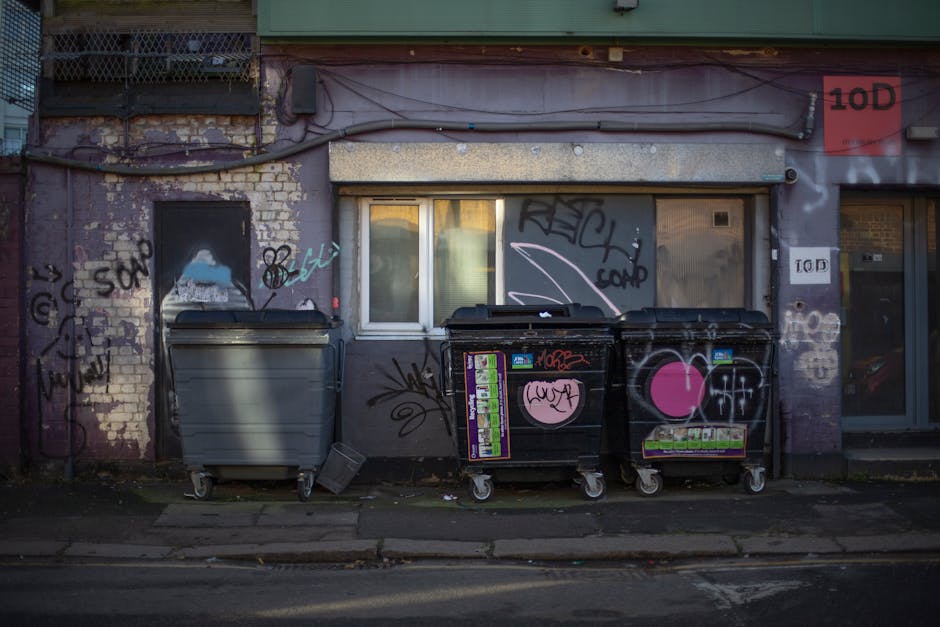
Church Road flats: tight-access rubbish clearance tricks
If you have ever tried to shift rubbish out of a flat block on a narrow stairwell, with a bendy landing, a tiny lift, and neighbours coming and going at the worst possible moment, you already know the problem. Church Road flats: tight-access rubbish clearance tricks are not about brute force. They are about planning, timing, carrying methods, and a calm bit of judgement that makes the job safer and far less stressful.
In a place where access can be awkward in all the usual London ways, the difference between a smooth clearance and a frustrating one is often in the small details. Which items come out first? Can the lift cope? Is the corridor clear? Do you need sacks, dollies, or just better sequencing? This guide breaks it all down in plain English, so you can make better decisions whether you are clearing a single room, a whole flat, or dealing with a last-minute move-out that has suddenly become a bit of a saga.
For readers who want to understand the wider service journey as well, it can help to look at the company's about us page, their pricing and quotes information, and their recycling and sustainability approach. Those pages give useful context before you book anything.
Table of Contents
- Why tight-access rubbish clearance in Church Road flats matters
- How the clearance process works in tight-access flats
- Key benefits and practical advantages
- Who this is for and when it makes sense
- Step-by-step guidance for a smoother clearance
- Expert tips for better results
- Common mistakes to avoid
- Tools, resources and recommendations
- Law, compliance, standards and best practice
- Options, methods and comparison table
- Case study or real-world example
- Practical checklist
- Conclusion
- Frequently asked questions
Why Church Road flats: tight-access rubbish clearance tricks Matters
Tight-access clearance matters because flats are rarely designed around bulky waste leaving the building. A sofa that seems normal in the living room can become an awkward, snag-prone object the moment it reaches a turn in the stairwell. A mattress can brush walls, a chest of drawers can catch on handrails, and a full bin bag can split if it is dragged rather than carried properly. That is the reality. A little blunt, but true.
In Church Road flats and similar block layouts, the risks tend to build up quickly: narrow shared corridors, limited parking, small lifts, time restrictions, and neighbours who quite reasonably do not want their front door blocked for half the afternoon. Add in a rainy day, some slippery paving, and a few heavy items, and you have the perfect recipe for a clearance that goes sideways.
There is also the practical side. Poor access planning can increase labour time, damage walls or flooring, and make sorting for recycling harder than it needs to be. You may end up paying for extra visits or clearing less in one go than you expected. A good approach saves time, protects the building, and keeps the job tidy. That is the real value here.
Expert summary: In tight-access flat clearances, the winning move is not to "push through" the obstacle. It is to reduce friction before it starts - smaller loads, cleaner routes, better timing, and the right lifting method for each item.
How Church Road flats: tight-access rubbish clearance tricks Works
The process usually starts with a quick access assessment. Not a dramatic survey, just a sensible look at the route from the flat to the vehicle. Where are the narrow points? Is there a lift? Are there steps at the entrance? Can a trolley turn the corners, or will it be useless halfway through? Once you know that, the clearance plan becomes much more straightforward.
The best method is often a combination of sorting, dismantling, and controlled movement. Instead of treating every item as one big job, you break the work into manageable parts. Soft waste goes in sacks, furniture is emptied and dismantled if needed, and awkward items are moved at the right time in the right order. You would be surprised how much difference this makes.
In practice, a tight-access rubbish clearance often uses a "route-first" approach. That means clearing the access path before shifting anything major. Shoes, plants, small boxes, loose cables, and anything else underfoot are removed first. Then the larger items follow once the route is safe and clear. Simple enough, but people skip it all the time.
If the building has shared access, a few extra care points matter. Doorways should stay unobstructed, lifts should not be overloaded, and any noise-sensitive work should be kept short and respectful. That is not just courtesy; it also prevents complaints and awkward conversations in the stairwell at 8:30 in the morning. Nobody wants that.
What makes a flat clearance "tight access"?
It usually means one or more of the following:
- Narrow staircases or landings
- Small or old lifts with limited capacity
- Restricted parking close to the entrance
- Long internal walk routes from the flat to the vehicle
- Shared hallways or fragile communal areas
- Items that are bulky, heavy, or awkwardly shaped
If several of those apply at once, planning matters a great deal more than muscle. To be fair, brute strength has its place, but it is overrated in a corridor with a sharp turn.
Key Benefits and Practical Advantages
The main benefit of using proper tight-access rubbish clearance tricks is that the job gets done with less disruption. That sounds modest, but in a block of flats it is huge. Less disruption means fewer complaints, less mess, and less chance of damage. It also means the move-out or declutter happens on schedule, which is often the real pressure point.
There are also some practical savings. When access is handled properly, loading can be more efficient. Items are moved in a sensible sequence, so you avoid backtracking up and down stairs with the same awkward object three times. You know the feeling: everyone gets that slight, exhausted pause where someone says, "Right, let's not do that again."
Another benefit is safety. Clear routes and smarter lifting reduce the risk of slips, trips, and strains. In shared residential buildings, that matters not just for the crew but for residents, visitors, and anyone passing through the hallway with a cup of tea and nowhere else to be.
Finally, there is a presentation benefit. A well-run clearance looks organised. Bags are not left in piles, the common areas stay usable, and the property is left in a much better state. For landlords, tenants, letting agents, and estate managers, that makes the whole process feel more professional.
When the difference really shows
The value becomes obvious in situations like end-of-tenancy clearances, probate clearances, pre-sale decluttering, or post-refurbishment waste removal. In those cases, timing and tidiness are often as important as speed. A rushed job can create more hassle than the rubbish itself.
Who This Is For and When It Makes Sense
This approach is useful for tenants moving out of a flat with too much to carry, landlords preparing a unit for re-let, and homeowners who have accumulated bulky items that will not fit through the usual route without some thought. It is also relevant for housing managers dealing with repeated fly-tipping at the edges of communal spaces, though that needs a careful, case-by-case approach.
It makes sense whenever access is awkward enough that a normal "collect and go" method might fail. If the waste is light and bagged, you may need very little. If there are wardrobes, broken appliances, old desks, or heavy boxes of mixed junk, then the right method becomes much more important.
Sometimes the job is not huge, just annoying. A few bags, one mattress, and an old TV can still be a pain if the lift is tiny and the corridor has a blind corner. In that kind of situation, the smartest move is often not bigger effort but better sequence.
These services are also a good fit when you want to reduce stress. Let's face it, the hard part is often not the lifting; it is the coordination. Who is available? What time can the vehicle park? Do you need to warn neighbours? Will the building manager be on-site? A bit of planning goes a long way.
Step-by-Step Guidance
Here is a simple way to think through a Church Road flat clearance where access is tight. This is not theory. It is the sort of process that prevents a lot of unnecessary faff.
- Walk the route first. Start from the flat door and follow the exit path all the way to the vehicle. Check stairs, turns, lift size, entry doors, and any low ceilings or pinch points.
- Separate waste by type. Put bagged rubbish, recyclables, furniture, electricals, and fragile items into different groups before moving them. Sorting later takes longer.
- Remove the easiest items first. Clear loose, light, or awkwardly placed items to open up space. This makes it easier to move bulky items safely.
- Dismantle what can be dismantled. Flat-pack furniture, bed frames, shelving, and some wardrobes can often be broken down into manageable pieces. Always do this carefully.
- Protect the route. Use covers or padding where needed on sharp corners, bannisters, and door frames. It is a small step that can save a repair bill.
- Load in the right order. Heavier or more rigid items usually go in first, with lighter bags and smaller pieces packed around them where sensible.
- Do a final sweep. Check corners, behind doors, inside cupboards, and under beds. The best "missed item" is the one you do not leave behind.
For many people, the biggest mistake is starting to carry before the route is ready. You can feel the temptation when the job is urgent. But a minute spent clearing the corridor can save twenty minutes of stop-start lifting.
A quick planning habit that helps
Take three photos before you start: the access point, the biggest item, and the tightest turn. That small habit makes it easier to judge whether you need extra help, a second person, or a different lifting method. It is oddly useful, and not just for the planner in the team.
Expert Tips for Better Results
One of the best tricks is to treat the clearance like a sequence, not a pile. That sounds obvious, but in a cluttered flat it is easy to forget. Sort by access difficulty as much as by waste type. The easiest stuff goes first, then the awkward stuff, then the bulky awkward stuff that needs two people and a bit of breathing room.
Use smaller sacks instead of overfilling one large one. In a tight stairwell, a heavy overfilled bag is not just harder to carry; it is more likely to burst or snag on a handrail. Smaller loads feel slower at first, then faster overall because nobody is wrestling with a monster bag halfway down the stairs.
If there is a lift, test whether it genuinely helps. Sometimes a lift saves time. Sometimes it is so small or so slow that it becomes part of the delay. You do not need to guess. Measure it once, then decide.
Another good habit is to think about noise. In older blocks, a dragged item can sound much louder than you expect. Lifting cleanly, setting items down gently, and avoiding banging around early in the morning makes the whole thing more neighbour-friendly. That helps more than people realise.
And yes, there is one more old-school tip: keep your exit point tidy as you go. If the hallway starts filling with temporary piles, the job feels bigger and messier than it is. A clean staging area keeps the job mentally lighter. That matters. It really does.
Common Mistakes to Avoid
The first common mistake is underestimating the access route. People focus on the waste volume and forget the route entirely. Then the sofa reaches the staircase and suddenly everyone is doing geometry in their head. Not ideal.
Another mistake is overpacking bags. Too much weight is hard to handle, harder to carry down stairs, and more likely to split. If something is heavy enough that you instinctively avoid lifting it on your own, that is a useful clue. Listen to it.
Skipping the sort stage is another classic problem. Mixed waste dumped together tends to slow everything down. It also makes recycling more difficult and can create avoidable confusion at loading time. A few minutes sorting saves a lot of mess later.
People also forget about communal responsibility. In flat blocks, hallways and entrances are shared spaces. Leaving items in the wrong place, blocking doors, or parking badly can create tension fast. Be considerate. It is basic, but worth saying.
Finally, some jobs fail because the plan is too optimistic. "We'll just get it out" is not a plan. It is a hope. Useful sometimes, but not on a narrow landing with a mattress and a dead fridge.
Tools, Resources and Recommendations
You do not need a van full of specialist kit for every clearance, but the right tools make awkward access jobs much easier. In many cases, a few practical items do most of the work:
- Heavy-duty sacks for loose rubbish and mixed light waste
- Gloves with a decent grip for safer handling
- Trolleys or dollies where the route allows them
- Rope, straps, or wrap for securing awkward items
- Protective covers for door frames, corners, and floors
- Labels or markers for sorting items before movement
Beyond tools, the best resource is usually a clear plan. If you are using a professional service, check how they handle access, safety, recycling, payment, and terms before the day of the job. Pages such as the health and safety policy, insurance and safety information, and the terms and conditions are worth reading because they help set expectations.
If you need to discuss a complex clearance, it is sensible to use the contact page rather than guessing at logistics. A quick conversation can save a lot of back-and-forth later. And yes, sometimes the simple phone call is the grown-up answer. Annoying, but effective.
Law, Compliance, Standards and Best Practice
For rubbish clearance in flats, compliance is not just a box-ticking exercise. It affects safety, neighbour relations, and what happens to the waste after it leaves the building. While the details vary by job, a careful operator should work within recognised UK waste-handling expectations, use sensible lifting and handling practice, and avoid leaving the site in a condition that creates a hazard.
Best practice usually includes being clear about what is being removed, how it will be handled, and what happens to recyclable or reusable items. It also means not overpromising. If access is restricted, the job may need a phased approach, a different vehicle position, or extra time. That is normal.
For residents and landlords, one practical sign of a trustworthy service is that it is open about safety, privacy, payment, and complaint handling. The supporting pages on payment and security, privacy policy, and complaints procedure can help reassure you that the process is handled properly. Not glamorous reading, perhaps, but still useful.
If you are unsure whether an item can be taken, or whether a building rule affects access, it is better to ask before collection day. That sounds painfully sensible because, well, it is. A five-minute check can prevent a very awkward no-access visit.
Options, Methods and Comparison Table
Different access problems call for different methods. Some clearances are fine with simple bag-and-carry work. Others benefit from dismantling, extra manpower, or a carefully timed loading approach. Here is a practical comparison.
| Method | Best for | Strengths | Limitations |
|---|---|---|---|
| Bag-and-carry | Light mixed waste, small clear-outs | Simple, quick, low equipment needs | Less suitable for heavy or bulky items |
| Dismantle and remove | Beds, shelving, wardrobes, flat-pack furniture | Easier through narrow routes, safer handling | Needs time and care, not suitable for every item |
| Trolley-assisted movement | Long corridors, level access, wider routes | Saves back strain, more efficient for repeated trips | Poor fit for stairs or tight turns |
| Two-person carry | Large furniture, appliances, awkward loads | More control, better for safety | Needs coordination and clear route space |
| Phased clearance | Complex flats, limited parking, busy buildings | Reduces disruption, keeps access manageable | Can take longer overall, but often worth it |
The right choice depends less on the item itself and more on the route. That is the key point. A lightweight chair can still be awkward if it catches on a stairwell corner; a heavier box can sometimes be easier if it stacks neatly and travels well.
Case Study or Real-World Example
Imagine a two-bedroom flat in a block with a narrow entrance, a small lift, and a tight turn at the first landing. The clearance includes black bags, two bedside units, a dismantled bed frame, a mattress, and a broken desk. At first glance, it looks straightforward. Then you realise the lift is too small for the mattress and the stairwell corner is sharper than it appeared from the lobby.
The sensible approach would be to clear loose waste first, pack the bags so they are easy to carry, and dismantle the bed frame before anything bulky moves. The desk would be split down if possible. The mattress would be carried last, once the route is fully open and the landing is clear. If the lift is suitable for the smaller pieces but not the mattress, the job would be split into phases rather than forcing everything through the same path.
In a real job like this, the biggest win is not speed for its own sake. It is avoiding damage to walls, avoiding complaints from neighbours, and finishing without anyone feeling knackered halfway through. That calm, orderly finish matters more than people think.
And honestly, half the battle is just not making the hallway look like a miniature battlefield. That alone helps the whole building breathe a little easier.
Practical Checklist
Use this checklist before starting a tight-access flat clearance:
- Confirm the route from the flat to the exit
- Check for stairs, lifts, narrow turns, and low ceilings
- Sort waste into practical categories before moving it
- Measure any bulky items that may need dismantling
- Clear hallways, doorways, and staging areas
- Protect walls, corners, and flooring where needed
- Decide which items should be moved first
- Use safe bag weights and sensible lifting methods
- Plan parking and loading access in advance
- Check recycling, donation, or disposal options for suitable items
- Do a final room-by-room sweep before leaving
If even two or three items on that list look uncertain, pause and re-check them. A slow five minutes can save a very messy half hour.
Conclusion
Church Road flats: tight-access rubbish clearance tricks are really about reducing friction. The more awkward the building, the more important it becomes to plan the route, break down bulky items, and keep the work calm and orderly. That approach protects the property, saves time, and makes the whole experience much less stressful for everyone involved.
If you are facing a flat clearance with narrow access, shared spaces, or items that just do not want to behave, do not leave it to guesswork. A little structure goes a long way, and the results are usually better than people expect. The job does not have to feel like a battle.
Get a free quote today and see how much you can save.
For a straightforward next step, you can review the company's pricing and quote guidance or use the contact page to talk through access details before booking. That early conversation often makes the whole day easier, and a lot less rushed.
Clear the path, trust the process, and let the job breathe a little. That is usually where the best results begin.
Frequently Asked Questions
What does tight-access rubbish clearance mean in a flat block?
It means removing waste from a property where the route to the exit is difficult: narrow stairs, small lifts, limited parking, or awkward corners. The job needs more planning than a standard collection because the access path is part of the challenge.
Why are flats on Church Road harder to clear than houses?
Flats often have shared hallways, stairwells, lifts, and tighter entry points. That can make bulky items harder to move safely. A house may still be awkward, of course, but flats usually add more access layers.
Can bulky furniture be removed from a very narrow staircase?
Often yes, but sometimes only after dismantling or changing the removal method. The item, the staircase, and the landing all need to be assessed together. Forcing it is usually a bad idea.
How do you clear rubbish without damaging the walls?
Use careful lifting, protect corners where needed, keep the route clear, and avoid dragging items. Smaller loads and better sequencing help a lot too. A bit of patience saves a lot of scuffs.
Is it better to use the lift or the stairs?
It depends on the size of the items and the lift capacity. Small bags and lightweight pieces may suit a lift, while bulky furniture may need a different route. The safest option is the one that fits the item properly.
What should I do before a rubbish clearance in my flat?
Sort items, measure bulky pieces, clear access routes, and identify anything that may need dismantling. If parking or building access is tricky, sort that out early too. The smoother the setup, the quicker the job goes.
How long does a tight-access clearance usually take?
It varies a lot depending on the amount of rubbish, the type of building, and whether items need dismantling. Tight access usually adds time, so it is wise to allow a little more than you would for a standard ground-floor job.
Do I need to tell the building manager first?
In many blocks, yes, or at least it is sensible to check. You may need access instructions, parking guidance, or timing preferences. It avoids confusion and keeps neighbours onside.
What items are most difficult to remove from flats?
Mattresses, wardrobes, desks, large appliances, and full bags that are too heavy to carry comfortably are common problem items. Anything awkwardly shaped can become difficult very quickly once it hits a tight turn.
What is the biggest mistake people make with flat clearances?
They assume the route will be fine and start moving items too soon. Once the hallway is blocked, everything gets harder. Planning the access path first is one of the simplest ways to avoid that.
How do I know if I need professional help?
If you have bulky items, limited time, a difficult staircase, or uncertainty about safe lifting, getting help is usually the sensible move. It is often cheaper in stress, if not always in cash, and that counts too.
What happens if access turns out to be worse than expected?
A good team should adapt the plan, whether that means dismantling items, using different equipment, or breaking the job into phases. The important thing is to be honest about the access problem rather than trying to bulldoze through it.